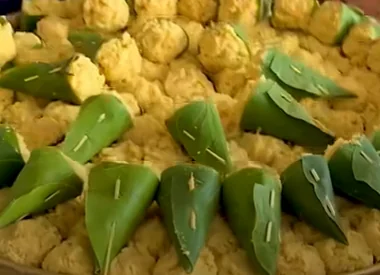
Long before modern culinary packaging existed, the ancestral mountain dwellers of Kumaon had perfected a harmonious relationship with their forest ecology. Deep within the temperate oak and sal forests of Uttarakhand thrives a remarkable woody climber known botanically as Bauhinia vahlii and revered locally as the Malu (or Maluwa) vine. For generations, the broad, leathery, fragrant leaves of this mountain climber have served as nature's most sophisticated confectionery wrapper for one of India's most extraordinary regional sweets: the iconic Singodi (also spelled Singori).
1. The Sacred Botanical Wrapper: Bauhinia Vahlii
To understand Singodi, one must first appreciate the singular magic of the Malu leaf. In the folk culture of Kumaon, the Malu vine is considered a botanical guardian of the soil. Its massive heart-shaped bi-lobed leaves possess unique physical properties:
- Structural Elasticity: Unlike ordinary leaves that crack and tear when folded, the fresh Malu leaf is supple and pliable, allowing artisans to fold it into perfect, leak-proof conical cups without adhesives or pins.
- Aromatic Essential Oils: The surface of the Malu leaf contains natural volatile terpenes that impart a subtle, woody herbal fragrance into warm milk fudge. When the sweet rests inside the leaf, it absorbs this unmistakable forest aroma—a delicate, grounding flavor that no artificial essence could ever simulate.
- Natural Thermal & Microbial Shield: Folk medicine has long recognized the natural antimicrobial and antioxidant properties of Malu leaves, which helped preserve dairy confections in the pre-electricity mountain climate.
2. The Craft of the Singori Artisan
At Vatsalaa Restro & Sweets in Halduchaur, preparing Singodi is considered an art form requiring the touch of a master halwai. The process unfolds in three delicate phases:
Phase 1: Sourcing & Curing the Forest Leaves
Fresh Malu leaves must be harvested at dawn from mountain slopes where the vines receive morning sunlight. Only tender, flawless leaves of uniform size and deep emerald green color are selected. The leaves are washed in pure filtered spring water, gently dried with clean muslin cloth, and kept wrapped in moist cotton to maintain suppleness until the moment of folding.
Phase 2: The Delicate Cardamom Mawa Fudge
Unlike Bal Mithai, which undergoes an intense 6-hour roast until dark mahogany brown, the khoya for Singodi is cooked with gentle restraint. Whole mountain milk is reduced slowly until it forms soft, ivory-white mawa with a velvety, moisture-rich consistency.
Finely pulverized cane sugar is blended into the warm mawa, followed by generous quantities of freshly ground green cardamom (Elaichi) and crushed desiccated coconut flakes. The cardamom essential oils blend seamlessly with the warm dairy fats, creating an intoxicating aromatic perfume that fills the kitchen.
Phase 3: The Geometry of the Cone
While the cardamom khoya is still warm and pliable, the artisan takes a prepared Malu leaf and folds it into a crisp, elegant cone with a swift, practiced twist of the thumb and forefinger. A portion of the velvety khoya is spooned into the interior, filling the cone completely and leaving the ivory-white surface visible at the circular top.
The sweet is then allowed to set naturally at cool room temperature. As the khoya cools and tightens, it marries permanently with the interior surface of the leaf, absorbing its herbal botanical fragrance.
3. The Ritual of Enjoying Singodi
Eating Singodi is a sensory experience unlike any other Indian sweet. It is not meant to be swallowed in a hurried bite; it is a ritual of slow discovery:
- The Visual Greeting: Hold the green conical leaf in your fingertips. Note the contrast between the deep emerald forest leaf and the creamy ivory-white cardamom fudge crowning the top.
- The Aroma: Bring the cone close to your nose before unwrapping. Inhale deeply: you will detect the fresh earthy scent of mountain foliage paired with the floral spice of crushed green cardamom.
- The Unfolding: Gently peel back the leaf flap. The leaf will release cleanly, revealing the soft, textured surface of the mawa fudge.
- The Taste: The fudge yields with luxurious softness on the tongue. It is smooth, moderately sweet, intensely aromatic, and finishes with a subtle, refreshing herbal note imparted by the Malu leaf.
4. Singori in Kumaoni Folk Ceremonies
Historically originating in Almora and spreading across Ranikhet, Nainital, and Haldwani, Singodi holds an auspicious status in Kumaoni celebrations. During traditional engagement ceremonies, pre-wedding sangeet functions, and post-harvest festivities, trays of freshly folded green Singori cones are distributed to honored family elders and guests as a symbol of prosperity, mountain hospitality, and living connection to nature.
Because of its higher moisture content compared to roasted Bal Mithai, authentic Singodi is best enjoyed fresh within 3 to 5 days of preparation. It represents the pinnacle of fresh hill hospitality—a confection that connects the modern diner directly to the pristine forests of Uttarakhand.
5. Experience Fresh Singodi at Vatsalaa
At Vatsalaa Restro & Sweets, we prepare small, handcrafted batches of fresh Singodi using authentic Malu leaves sourced directly from foothill forest foragers. We believe that preserving such living culinary traditions is our sacred duty to the culture of Uttarakhand.
Whether you are exploring our regional confections on our dedicated Singori Page, comparing confections on our Kumaoni Sweets Heritage Hub, or visiting our family dining room in Halduchaur, we invite you to experience the unforgettable botanical magic of authentic Singodi.
6. The Ecological Conservation of the Malu Forest Vine
As global consumers increasingly seek compostable, sustainable food packaging, the ancient Kumaoni Singori stands as a brilliant historical template of zero-waste confectionery. The Malu vine is a hardy, non-timber forest species that grows wild along cliff edges and ravine walls across Kumaon.
Traditional harvesting practices in Uttarakhand follow sacred conservation rules:
- Harvesters only pick mature lateral leaves, leaving the central vine stem and tender shoots untouched so the plant continues vigorous photosynthesis and root stabilization.
- Unlike plastic wrappers that linger in landfill ecosystems for centuries, the discarded Malu leaf biodegrades naturally into rich soil compost within ten to fourteen days.
- Supporting authentic Singori production provides seasonal supplementary income for rural hill foraging families who harvest and supply leaves to traditional sweet masters.
7. Storage & Serving Etiquette for Modern Travelers
Because Singori contains pure, delicate mawa with a soft moisture content, observe these preservation tips:
- Keep the sweets nestled in their presentation box in a cool, shaded environment (18°C–22°C).
- Do not remove the Malu leaf until the exact second you are ready to eat the sweet. The leaf maintains internal moisture equilibrium and protects the delicate cardamom fudge from oxidation.
- Singori is best enjoyed fresh within 3 to 4 days of hand-folding. It is the purest taste of fresh hill confectionery you can share with your family.