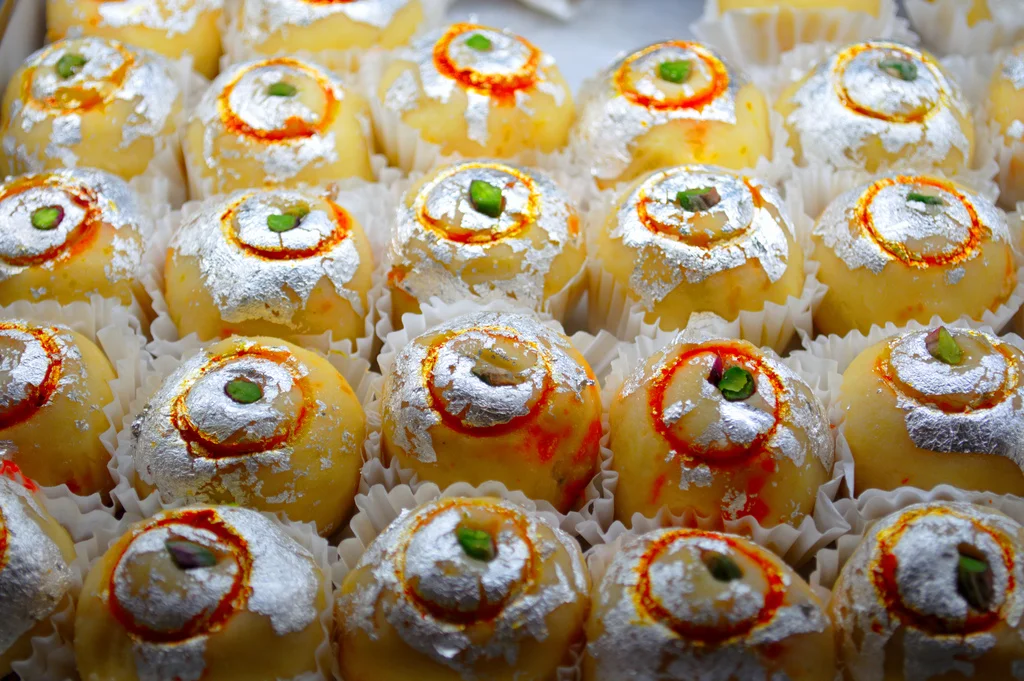
In the realm of traditional Indian confectionery, there are no shortcuts to true excellence. While industrialized confectionery increasingly relies on hydrogenated vegetable oils, reconstituted milk powders, artificial milk essences, and artificial chocolate stabilizers, the centuries-old sweet makers of the Uttarakhand foothills continue to practice an art governed by patience, thermodynamics, and the pristine dairy terroir of mountain cattle.
1. The Terroir of Kumaoni Milk: Where Purity Begins
To understand why sweets like Bal Mithai and Chocolate Mithai taste fundamentally richer when prepared in the Kumaon region, one must look first to the source: the milk itself. The grazing cattle in the Tarai-Bhabar belt and the lower Himalayan ridges surrounding Halduchaur, Haldwani, and Nainital feed upon fresh alpine grass, medicinal herbs, and natural pasture flora.
This unhurried, natural grazing diet yields whole milk with a remarkably high fat-to-protein ratio and an abundance of beta-carotene and natural dairy aromatics. Buffalo milk from the foothill valleys provides the dense, velvety body required for slow-reduced khoya, while local cow milk contributes golden color and delicate floral top notes.
When this raw milk arrives at the kitchens of Vatsalaa Restro & Sweets every morning at daybreak, it is subjected to immediate quality testing. Only whole milk that meets our exacting standards of density, sweetness, and cleanliness is allowed to enter the copper and heavy-bottomed iron simmering pans.
2. The Physics and Chemistry of Slow Khoya Reduction
Evaporated milk solid, universally known across India as Khoya or Mawa, is the foundation of over eighty percent of traditional sweets. Yet how khoya is made defines the gulf between mediocre sweets and transcendent confectionery.
In industrial setups, milk is passed through rapid steam-jacketed evaporators under vacuum. While efficient, this flash evaporation process shears delicate milk proteins and fails to develop the nuanced caramel aromas that characterize handcrafted mawa.
In contrast, our master halwais at Vatsalaa employ traditional wide-brimmed iron Kadais set over controlled wood and gas burners. The reduction process follows three distinct scientific stages:
- Stage 1: Evaporation (Rabri Phase): The raw milk is brought to an active boil and stirred continuously with heavy, curved wooden spatulas (Khurpi). Over the first ninety minutes, moisture evaporates steadily, concentrating milk fats and lactose until the liquid thickens into creamy, granular Rabri.
- Stage 2: Coagulation (Danedaar Khoya Phase): As water content drops below twenty percent, milk proteins (casein and whey) denature and link with butterfat globules. Constant rhythmic scraping of the pan walls prevents scorching while aerating the mixture, producing a luxuriously smooth, cohesive dairy dough.
- Stage 3: The Maillard Caramelization Phase: This is where true mountain mastery occurs. For signature confections like Bal Mithai, the heat is modulated to a gentle simmer. Over four to six additional hours, amino acids and milk sugars (lactose) undergo the famous Maillard reaction. Without adding a single milligram of cocoa, chocolate, or food coloring, the golden-white mawa transforms into a dense, mahogany-brown fudge with intoxicating aromatics of roasted hazelnuts, toffee, and malted dairy.
3. The Golden Elixir: Desi Ghee & The Bilona Method
If khoya is the body of traditional mithai, pure Desi Ghee is its life-giving spirit. At Vatsalaa, every sweet requiring frying or binding—from melt-in-the-mouth Motichoor Laddoos and roasted Besan Barfis to flaky Gujiyas and festive Arsas—is prepared strictly in 100% pure desi cow ghee.
Why is pure ghee irreplaceable?
- High Smoke Point (250°C / 482°F): Unlike refined vegetable oils (Vanaspati / Dalda) that break down into harmful free radicals and trans fats at high temperatures, pure ghee remains chemically stable, ensuring clean, crisp frying without burnt flavors.
- Nutrient Bioavailability: Ghee is rich in short-chain fatty acids like butyric acid, which aids digestion, and fat-soluble vitamins A, D, E, and K. When paired with protein-rich lentils and nuts, ghee facilitates smooth absorption and sustained satiety.
- Aromatic Longevity: The natural antioxidants in pure ghee act as a preservative. Sweets made with authentic ghee retain their crisp texture and deep fragrance for days without synthetic chemical preservatives.
4. How to Spot Pure Mithai: 4 Tests You Can Do at Home
In an era where adulteration of festival sweets with starch, chalk, and refined palm oil makes headlines, discerning customers in Haldwani and Uttarakhand deserve total transparency. Here are four simple tests used by professional halwais to verify pure milk sweets:
- The Palate Melt Test: Place a small piece of mawa or barfi on your tongue and let it rest without chewing. Authentic khoya made with pure ghee melts gently through body heat, leaving a clean, warm dairy finish. Adulterated sweets feel waxy, chalky, or leave an oily coating on the roof of your mouth.
- The Iodine Starch Test: Boil a teaspoon of the sweet in water, let it cool, and add 2–3 drops of tincture iodine. If the sample turns deep purple or blue, starch or potato flour has been added to artificially bulk the khoya. Pure mawa retains a light yellowish-brown hue.
- The Palm Rub Test: Rub a small pinch of the sweet between your palms. Pure khoya will leave a gentle sheen of natural ghee that smells fragrant and absorbs cleanly into the skin. Adulterated sweets feel greasy, smell faintly chemical, or leave gritty residue.
- Natural Color Variation: Handcrafted sweets exhibit subtle, beautiful natural variations in shade depending on the season and the milk fat profile. Overly uniform, vibrant artificial colors often conceal cheap fillers.
5. Our Commitment to Heritage & Purity Since 2004
When Mr. Sanjay Dumka and Mrs. Lalita Dumka established Vatsalaa Restro & Sweets in Halduchaur in 2004, they made a foundational promise: never to compromise on ingredient purity, no matter how fast the market rushed toward convenience.
More than two decades later, our master sweet artisans still arrive before sunrise to oversee fresh milk reduction in heavy iron vessels. We source pure mountain dairy daily, use hand-sorted dry fruits, and grind our spices fresh in small batches.
Whether you are ordering a single box of fresh Bal Mithai for an afternoon family tea or arranging 500 corporate gift hampers for your workforce in Rudrapur SIDCUL, you can trust that every sweet that bears the Vatsalaa emblem represents the genuine soul of mountain confectionery.
Visit our flagship sweets counter in Halduchaur, browse our complete assortment on our Sweets Overview page, or coordinate fresh custom boxes via WhatsApp at +91 94512 96233.